What Day One looks like when you run your own business: Oyinkansola Ogunyinka Edem
Content marketer, Oyinkansola Ogunyinka Edem, on treating yourself as a business, the fear that comes just before closing a client, and learning to front-load what each new start needs.
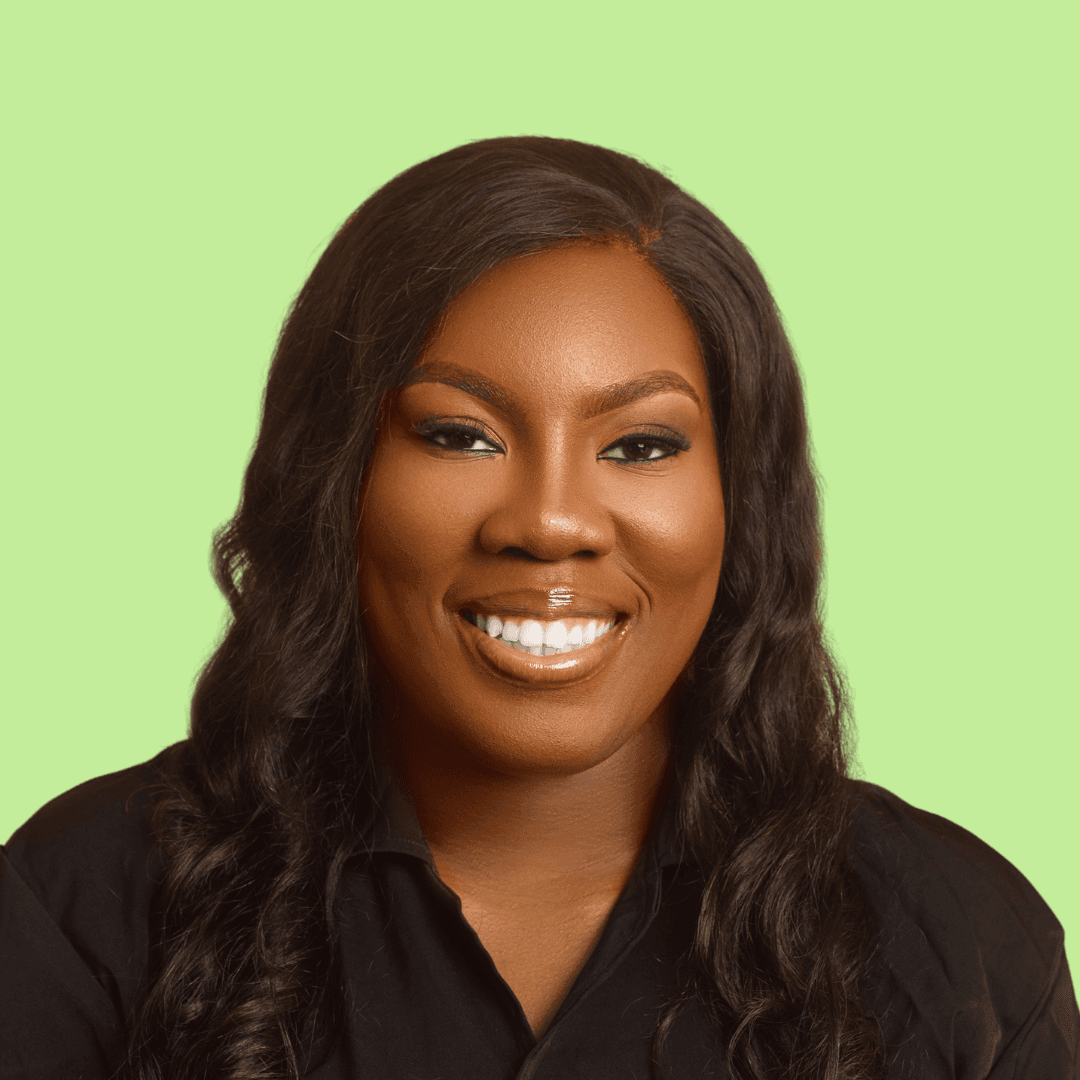
Most people get one Day One per season. You accept the offer, spend the night before wondering what everyone will think of you and show up on Monday morning trying to look like you know exactly what you're doing. Then, eventually, the unfamiliar becomes familiar, the people have names, you know where the bathroom is, you know which meetings could have been emails. It becomes just a job.
For Oyinkansola Ogunyinka Edem, Day One doesn't work like that. She gets a new one every time she takes on a new client, pitches a new service, or decides she’s ready to try something she’s never done before.
And she has had quite a few.
She is a content marketer and self-published novelist who has spent six years writing for global brands and building a freelance practice that now runs on her own name. And for a freelancer, Day One is not a single morning. It is a thing that keeps coming back, with every new client and every new service she adds. The nerves never fully retire, they just change shape.
We talked to her as part of our Day One series on the first days noone really prepares you for. Hers turned out to be a story about having those first days over and over, and slowly learning what to carry into each new one.
Let’s go back to the beginning when it started with her doing a cocktail of marketing roles rolled into one:
Oyinkansola got her first job at 18, right after graduating from university. Content developer at a fintech startup, though the title undersold it.
"I was the marketing content everything person," she says. “Newsletters, blog, social, push notifications, SMS, web copy, app copy. Everything you can think of related to content or marketing, I did." She stayed two and a half years, got moved up twice, watched her pay climb from 40k to 150k (NGN).
At the time, she enjoyed doing it all as it gave her the capacity to execute across many layers and learn by doing.
"They gave me a chance. And I just believed that if you are in something and you don't know it, then go and learn it." This instinct, to treat not knowing as a temporary condition rather than a verdict, is the underlying pattern that runs through everything Oyinkansola has done since.
The Day One when she stopped being ‘just a writer’
There was a point when Oyinkansola realised that knowing how to execute the work wasn't quite enough.
In her next role at an agency, she was put on accounts and mostly asked to write. There was a strategist above her, an editor beside her, a whole team around her. "I was mostly just writing," she says. Comfortable, but boxed in.
Change came when she started freelancing and pitched one of her clients something bigger than a brief. A monthly retainer where she would ideate, execute, report, and own the work from start to finish.
"I realised they didn't really have anybody doing it for them on a proper level in-house," she says. So she stepped into the gap.
She started planning, reporting on results, proposing strategy, digging into what was working and what was not. "I could own it a bit more end to end, so subsequently I don't have to portray myself as just a writer. I could portray myself as the strategist too, because I've actually done it before."
This is the quiet turning point in a lot of freelance careers, the moment you stop waiting to be handed the brief and start creating it yourself.
What Day One feels like when nobody hires you for it
When you work for yourself, the first day of a new client relationship arrives loaded with a very particular kind of anxiety. There is a lot of anxiety about whether the work you have put in to get the client actually works out. So, it’s not the fear of work, but whether the work will even happen.
"A lot of the worry is really just before closing," she says. "You are doing a lot of hard work to attract them, to get them on a call, and you are not sure if you are going to close them." You pour yourself into landing someone who may still say no.
She does not pretend to have transcended the nerves. She has just made peace with them.
"Fear of failure pushes me to try not to fail, which means putting in the work to succeed."
The AI reckoning everyone is talking about
You cannot write honestly about content work in 2026 without talking about AI, and she does not flinch from it.
The market did not collapse the way people predicted. If anything, this year has been busy for her, partly because she got deliberate about her pipeline. But the nature of the work has bent into strange new shapes. She now quotes two rates, one for fully human writing and one for AI-assisted work.
A client recently chose the AI-assisted rate, roughly half her human rate, but the company was good enough that she wanted it in her portfolio anyway. She took it on her own terms. Then there are the clients who want the opposite, guaranteed human writing, no AI anywhere near it.
Her read on all of it is refreshingly unbothered. AI is doing its thing, and there are still people hiring, for AI-assisted content, for AI-assisted workflows, and for plain writing where the human is unmistakably the point. For Oyinkansola, the work did not disappear. It rearranged itself, and she rearranged her process with it.
You are your own business
If there is one line from our conversation that every freelancer should tape to their wall, it is this one. "You have to see yourself as a business. You are your own business."
She means it structurally, not as a slogan, “It means spending to earn, treating your own visibility as part of the job, not a distraction from it. It means keeping your pipeline as full as you can, applying almost every other day, and understanding that most of the good work comes through people. Introductions, referrals, a warm word in a community, someone saying I know who you need."
Her recent close came through exactly that, an introduction first, then the proof of a test project.
"You cannot just sit and expect work to come to you," she says. So she does not. She shows up in the rooms, she asks for the intro. She says out loud that she is looking. The pipeline is the product.
The newest Day One, and what she is carrying into the next
The clearest illustration of her whole philosophy is one of the most recent first day ones she had. Three months ago, she closed her first official LinkedIn ghostwriting client, a brand new service for her.
She did what she always does.
- She learned the thing on the job that she wished she had known walking in.
- She created a structure which includes; a recurring weekly slot in the calendar, regular check-ins so they could see her working inside their team, and a monthly meeting with the CEO.
- She stopped waiting for engagement and started building it into the arrangement.
"You are always learning what you wish you knew earlier on the job. My next Day One will look very different, because I am going to front-load a lot of these things."
That is what Day One is for when you consult or freelance. Not to be smooth or be impressive. It’s to teach you what the next move needs.
Nobody feels ready for the first day, whether it is a new role, a new client, or a new thing you have never sold before.
The people who grow are simply the ones who keep having first days and keep carrying a little more wisdom into each one.
Day One is a Daysim series about the first days nobody prepares you for. Daysim is a secure platform where you can practise new roles before you begin.