Mirabelle Morah stopped waiting for a "yes" and created her own path
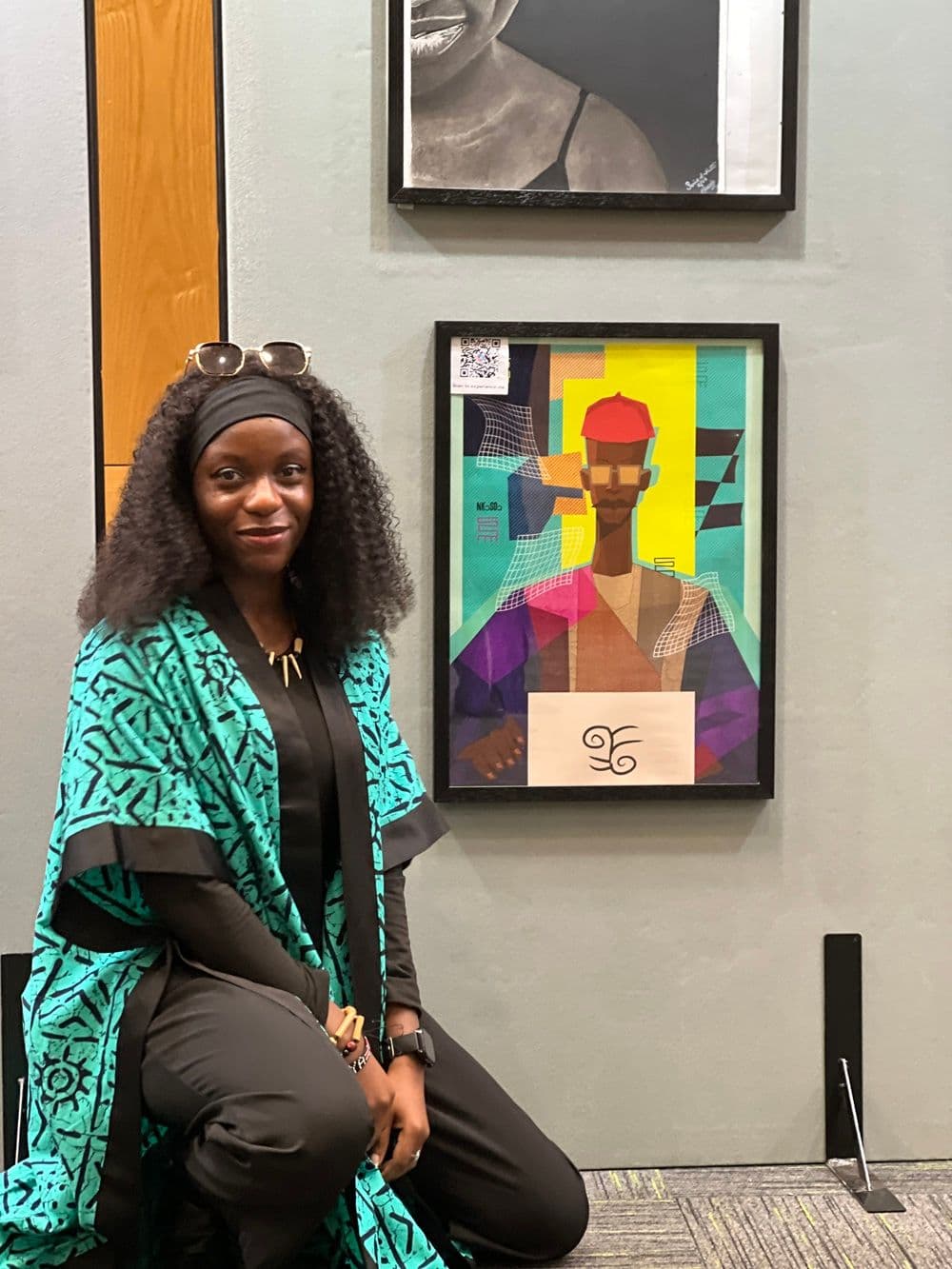
We spoke to Mirabelle Morah as part of our Day One series. Hers is a story about what happens when the door and opportunities you expected to walk through stays shut, and you decide to build a different one. This is how Mirabelle built Grohwie.

Some people get their first day handed to them. They accept an offer, walk in, and begin. Mirabelle Morah kept waiting for that day to arrive, and it didn't. So she built her own.
Mirabelle is the founder of Grohwie, a creative studio that uses design and motion to solve marketing and communications problems for purpose-led brands. But before Grohwie was a studio with clients and accelerator backing, it was a dissertation, a strong urge, and a stretch of rejections she had to walk through first.
We spoke to her as part of Day One, our series about the first days nobody really prepares you for. Hers is a story about what happens when the door you expected to walk through stays shut, and you decide to build a different one.
Day one was, honestly, confusing
Ask Mirabelle what the very beginning of Grohwie felt like, and she doesn't reach for a tidy origin story. "To be honest, it was confusing," she says, then laughs at how much less dramatic it felt than she expected. The urge to start was strong, though. Grohwie had actually begun as her dissertation during a master's in Entrepreneurship and Innovation at the University of Edinburgh, where she researched how design and creative work could solve marketing and communications problems for purpose-led brands. She wanted to do exactly that kind of work.
After her master's, she was already employed, leading brand and communications globally for an organisation on the client side. But the pull to build something of her own would not leave her alone. Barely a year into a new country, she assumed the sensible first step was to land a creative role at an agency or studio, in Edinburgh, London, anywhere, just to get the proverbial foot in the door. She got some interviews, including with companies behind Netflix animations she loved. And then came the nos, or worse, the silence. People either turned her down or never got back to her.
So she started Grohwie instead. The early months were full of uncertainty, and she is refreshingly honest about the shape it took. She didn't fully feel comfortable charging for her work yet. She felt a little uneasy calling herself a creative director, saying out loud that she worked for herself. "I know, crazy yeah?" she says. But underneath the wobble was a conviction she keeps coming back to: "If God lays something in your heart, you should always go for it, because he'll give you transport money." Her first client believed in her, which gave her more confidence than any title could have. She still didn't know what to charge, so she brought in someone else, asked her what to bill, and split the money. And even then she wasn't all the way in yet. She kept applying for jobs to cover her bills, and kept not getting them.
The turn came from a stranger. At an event called Colour Theory, Thorranze, a speaker, told her that if she decided to go all in, the universe would side with her. "I think that was all the encouragement I needed," she says. She went all in, with what she calls "if I perish, I perish" Esther energy. "Sometimes you've just got to say enough to fear, and then go all in." She is glad she did. By the next year she was being accepted into accelerator programmes and getting funding to build out design products.
The stretch of nos, in her own words
The most honest answer in our whole conversation came when we asked what was actually going through her head during the rejections. She didn't give us a polished reflection. She gave us the real, unfiltered spiral, and it is worth reading exactly as she said it:
"Am I not good enough? What more do I need to do? I think I'm awesome. What skills do I need to sharpen? Is it because I don't have a traditional design education? Well, their loss. Oh no, what am I ever going to do? I'm sure I'll succeed in this. I'm so sure. Wow. How do I pay my bills? Jesus save me. Who do I ask for advice now? Who can I mirror? Wow, this freedom and work is wonderful. Wait, wait. What if it doesn't work? Okay. Enough is enough, let's do this."
Anyone who has ever bet on themselves knows that exact loop. The confidence and the panic living in the same breath. What makes Mirabelle Mirabelle is that the loop always seems to end in the same place: enough is enough, let's do this.
Asking for advice instead of a job
Somewhere in the rejections, Mirabelle changed her approach, and it changed everything. "They say if you ask for money, you'll get advice, but if you ask for advice, you'll get money," she says. She realised that when she was applying to jobs, her default answer was already a no, because she hadn't actually approached anyone to try to turn it into a yes. So what did she have to lose by being a little extra?
She found ten to fifteen companies she liked and, in her words, added emojis to her CV, personalised each one by working the company's name into her profile summary, laughing as she admits it, and did the same in the body of each email. She told them she wanted to spice up their teams. The replies ranged from "sorry, we're not hiring right now" to "this is so cool, we've just sold our company but we'll keep you in the loop."
One in particular became a story she still treasures. She had applied to a top studio in London and received the standard "we regret to inform you." Mirabelle went to LinkedIn, sent the founder a direct message explaining what she had done and what was blocking her, and asked for an hour of his time for advice. A few weeks later she flew to London and sat with him for an hour, and he told her he knew she would do great in her design journey. Did she get a job? No. Did she start a relationship that mattered? Absolutely. "Invaluable lifetime memory," she says.
Deciding what Grohwie would not be
Early on, while still in the research phase during her master's, Mirabelle had reached out to several design leaders for advice. One was Clark Scheffy, who spent close to twenty years at IDEO and has worked with some of the best brands in the world. His advice reshaped how she thought about her own studio: build the one you genuinely want to run, rather than trying to become everything to everyone.
Deep down, she only wanted to focus on animation and motion design. But there were other pulls, branding, content strategy, the temptation to partner with any organisation that needed help. Clark's advice made her think hard about what she actually had the capacity to do, what the market was genuinely asking for, and where those two things met. "Like Ikigai, but for business," she says. It gave her permission to stop playing small and stop playing the uncertainty game. "It's good to know what you want for yourself, so I stopped playing small and just went for what I wanted." From there she watched where the market was heading and rode that wave, guided by her values and her vision for Grohwie.
Making peace with the thing she didn't study
Mirabelle didn't come from a traditional design background. She taught herself. And rather than let that become a wound she keeps poking, she has made a kind of peace with it that doubles as a leadership philosophy.
"There will be studios and individuals doing more beautiful work than I am, and those that are not. That's okay." That acceptance is exactly why she likes to work with and hire people whose skills far outstrip her own in certain areas. "That's leadership, and that's business," she says. There is no point crying about what she did or didn't study ten years ago. "I'm constantly growing and delegating." The self-taught gap she once worried might hold her back turned into the instinct that now shapes how she builds her team.
What she'd tell the woman sending those first cold emails
We ended where we like to end, by asking Mirabelle what she would say to the version of herself firing off those personalised, emoji-laden emails, unsure whether any of it would work.
She didn't reach for grand advice. She reached for tenderness.
"Sometimes nne, try and relax, okay."
It is the perfect note to end on, because it holds both things at once; going all in, and the gentleness she has since learned to offer herself. Nobody feels ready to bet on themselves. The ones who grow are simply the ones who say enough to the fear, send the email anyway, and eventually learn to relax on the way.
Day One is a Daysim series about the first days nobody prepares you for. Daysim is a secure platform where you can practise new roles before you begin.